What is Technical SEO?

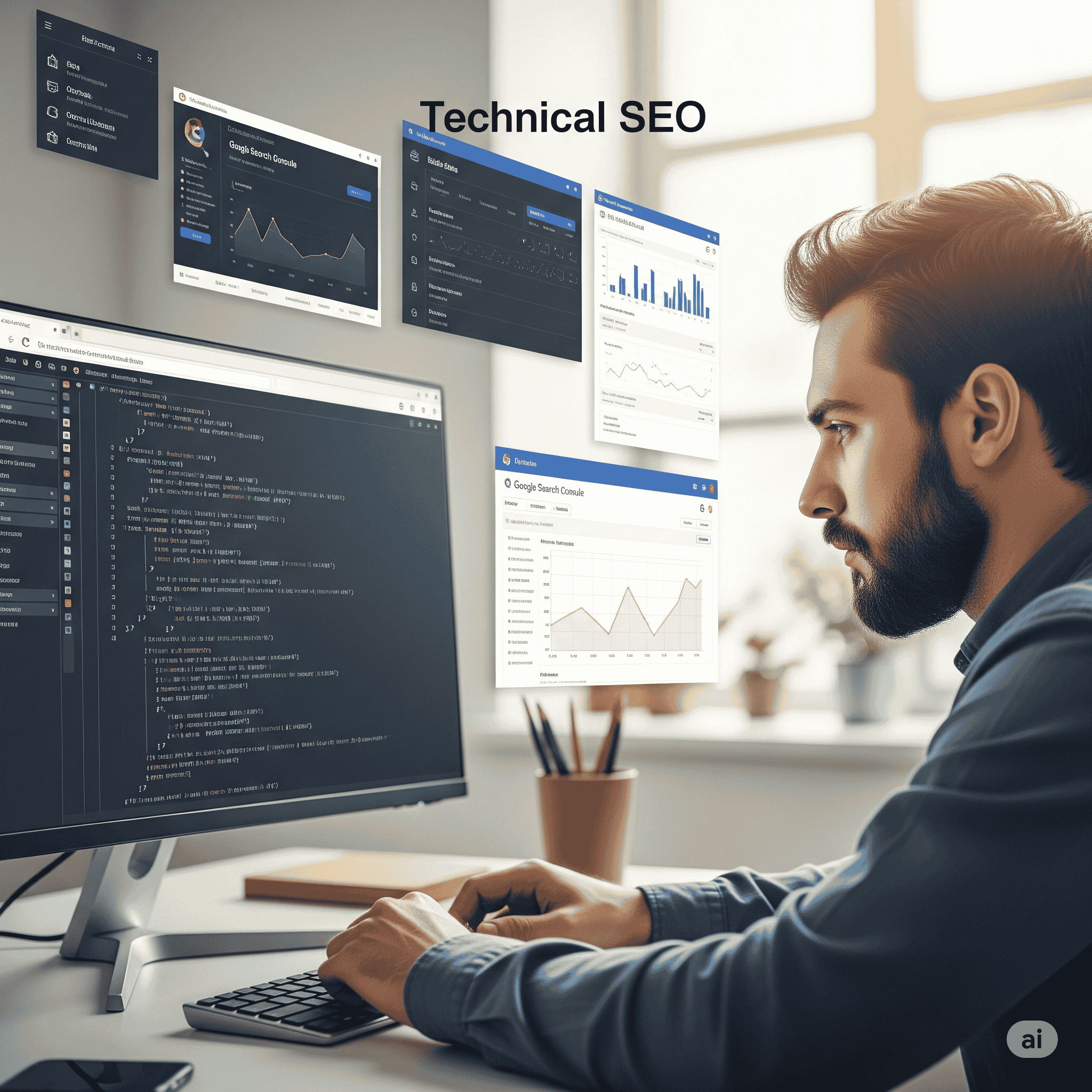
Technical SEO is the backbone of a high-performing website, ensuring it’s fast, secure, and easy for search engines like Google to crawl and index. It’s the behind-the-scenes work that makes your content shine, driving higher rankings and better user experiences. Whether you’re a content writer optimizing blog posts, a marketer boosting brand visibility, or a business owner aiming to dominate search results, mastering technical SEO is essential for success in 2025. This comprehensive guide, inspired by industry leaders like Moz, SEMrush, Ahrefs, Neil Patel, Yoast, and Backlinko, explains what technical SEO is, why it matters, key strategies, tools, examples, and a checklist to rank #1. Let’s dive in and get your website technically perfect!
- Definition: Technical SEO involves optimizing site speed, mobile-friendliness, security, crawlability, indexability, and structured data to make your website search-engine-friendly.
- Purpose: Ensure Google can crawl and index your pages while delivering a fast, seamless experience to users, boosting rankings and traffic.
- Example: Fixing broken links on an e-commerce site selling eco-friendly products so Google can index all product pages, helping them rank for “sustainable home goods.”
Technical SEO is a critical component of digital marketing, SEO, and website optimization, laying the foundation for content and link-building efforts in niches like e-commerce, education, or technology.
Why is Technical SEO Important?
Technical SEO is like tuning a car’s engine—without it, even the flashiest vehicle won’t perform. Here’s why it’s vital, drawing from Moz, SEMrush, and Backlinko:
- Improves Rankings: A technically sound site is easier for Google to crawl and index, increasing your chances of ranking higher.
- Enhances User Experience: Fast load times, mobile-friendliness, and secure connections keep visitors engaged, reducing bounce rates.
- Drives Organic Traffic: Proper indexing ensures all your pages appear in search results, attracting more clicks.
- Supports E-E-A-T: A well-optimized site signals Expertise, Authoritativeness, and Trustworthiness, a key Google ranking factor, as Yoast emphasizes.
- Prevents Penalties: Fixing issues like duplicate content or broken links avoids Google penalties, per Ahrefs.
- Boosts Conversions: A smooth, fast site encourages actions like purchases or sign-ups, as Neil Patel notes.
For example, an online tutoring platform optimizing its site speed can rank higher for “online math courses,” attracting more students.
What is the Primary Goal of Technical SEO?
The primary goal of technical SEO is to ensure your website is easily crawlable, indexable, and user-friendly so search engines can rank it accurately and users enjoy a seamless experience. This involves:
- Crawlability: Allowing Google’s bots to access all pages.
- Indexability: Ensuring pages are included in Google’s search index.
- User Experience: Delivering fast, secure, and mobile-friendly pages.
This goal is like ensuring a library’s books are organized and accessible, so readers can find what they need, as Moz highlights.
Technical SEO vs. On-Page and Off-Page SEO
Here’s how technical SEO compares to on-page SEO and off-page SEO, inspired by Ahrefs and SEMrush:
- Technical SEO:
- Focuses on backend optimization (e.g., site speed, crawlability, security).
- Ensures search engines can access and index your site.
- Example: Adding an XML sitemap to an e-commerce site to help Google find all product pages.
- Goal: Create a technically flawless site.
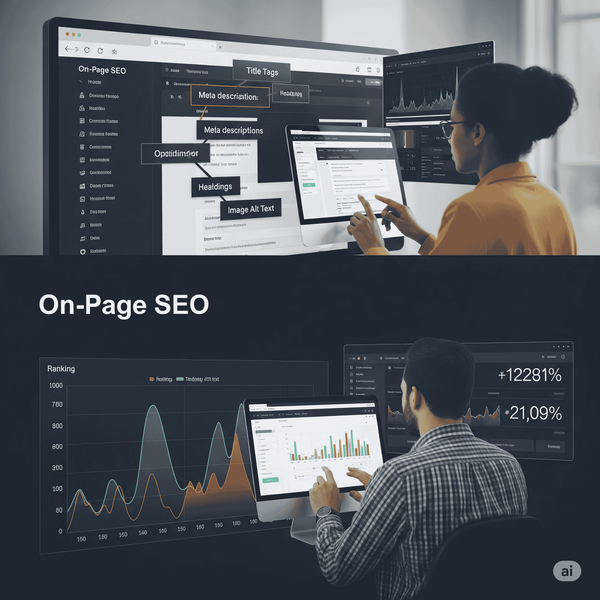
- On-Page SEO:
- Focuses on content and on-page elements (e.g., keywords, meta tags, headings).
- Optimizes individual pages for relevance.
- Example: Using “sustainable home goods” in a product page’s title and content.
- Goal: Make pages relevant and user-friendly.
- Off-Page SEO:
- Focuses on external signals (e.g., backlinks, social media, reviews).
- Builds authority and reputation.
- Example: A lifestyle blog linking to your e-commerce site’s “eco-friendly products” page.
- Goal: Increase trust and referral traffic.
Key Difference: Technical SEO is the foundation, ensuring your site works perfectly, while on-page SEO adds content relevance, and off-page SEO builds external credibility. Together, they’re like a well-built house (technical), beautifully decorated (on-page), and highly recommended (off-page), per Backlinko.
What Does Technical SEO Involve?
Technical SEO covers a wide range of backend optimizations, as outlined by Moz, SEMrush, Yoast, and Neil Patel. Here’s what it includes:
- Crawlability: Ensuring search engine bots can access all pages (e.g., fixing broken links, optimizing robots.txt).
- Indexability: Allowing Google to include pages in its index (e.g., removing noindex tags, managing canonicals).
- Site Speed: Reducing load times for better user experience and rankings.
- Mobile-Friendliness: Ensuring responsive design for mobile devices.
- Security: Implementing HTTPS for secure connections.
- Structured Data: Adding schema markup to enhance search result features (e.g., rich snippets).
- Site Architecture: Creating a logical URL structure and navigation.
- Duplicate Content: Resolving issues that confuse search engines.
- Redirects: Managing 301 redirects for moved or deleted pages.
- XML Sitemaps: Submitting sitemaps to guide crawlers.
- International SEO: Using hreflang tags for multilingual sites.
These elements ensure your site is a well-oiled machine, as Ahrefs emphasizes.
Major Technical SEO Factors
The major technical SEO factors that impact rankings, per SEMrush, Backlinko, and Moz, include:
- Crawlability:
- Ensure bots can access pages via proper robots.txt and no broken links.
- Indexability:
- Use correct meta tags (e.g., no “noindex”) and canonicals to avoid duplicate content.
- Site Speed:
- Aim for load times under 3 seconds, using tools like PageSpeed Insights.
- Mobile-Friendliness:
- Ensure responsive design, tested with Google’s Mobile-Friendly Test.
- HTTPS Security:
- Secure your site with an SSL certificate.
- Structured Data:
- Implement schema markup for rich snippets (e.g., product ratings).
- Site Architecture:
- Use a flat, logical URL structure (e.g., www.site.com/category/product).
- XML Sitemap:
- Submit an updated sitemap to Google Search Console.
- Redirects:
- Use 301 redirects for permanent changes, avoiding 404 errors.
- Core Web Vitals:
- Optimize Largest Contentful Paint (LCP), First Input Delay (FID), and Cumulative Layout Shift (CLS) for user experience.
These factors are like ensuring a store is accessible, organized, and welcoming, per Yoast.
What is an Example of Technical SEO?
Here’s a unique example of technical SEO for a fictional online bookstore:
- Scenario: Your bookstore wants to rank for “best novels 2025.”
- Technical SEO Actions:
- Site Speed: Compress images of book covers, reducing load time from 5 to 2 seconds.
- Mobile-Friendliness: Redesign the site to be responsive, ensuring easy navigation on phones.
- XML Sitemap: Submit a sitemap to Google Search Console, listing all book category pages.
- Broken Links: Fix 50 broken links to out-of-stock books, avoiding 404 errors.
- Structured Data: Add schema markup for book reviews, displaying star ratings in search results.
- HTTPS: Secure the site with an SSL certificate for safe checkouts.
- Canonical Tags: Add canonicals to duplicate pages (e.g., similar book editions) to prevent indexing issues.
This ensures Google can crawl and rank all pages, driving traffic to “best novels 2025,” aligning with Backlinko’s focus on user experience.
Top Technical SEO Strategies for 2025
Drawing from Moz, SEMrush, Ahrefs, Neil Patel, Yoast, and Backlinko, here are the most effective technical SEO strategies to rank #1 in 2025:
1. Optimize Site Speed
- Why: Slow sites frustrate users and hurt rankings, per Google’s Core Web Vitals.
- How:
- Compress images with tools like TinyPNG.
- Enable browser caching and minify CSS/JavaScript.
- Use a Content Delivery Network (CDN) like Cloudflare.
- Example: Your bookstore reduces page load time to 1.8 seconds, improving rankings for “best novels.”
2. Ensure Mobile-Friendliness
- Why: Mobile-first indexing means Google prioritizes mobile versions, per Moz.
- How:
- Use responsive design frameworks (e.g., Bootstrap).
- Test with Google’s Mobile-Friendly Test.
- Simplify mobile navigation.
- Example: Your bookstore’s mobile site allows easy book searches, boosting mobile rankings.
3. Secure with HTTPS
- Why: HTTPS is a ranking signal and builds user trust, per SEMrush.
- How:
- Install an SSL certificate via your host or Let’s Encrypt.
- Redirect HTTP to HTTPS with 301s.
- Example: Your bookstore’s secure checkout page ranks higher for “buy novels online.”
4. Improve Crawlability
- Why: Bots must access all pages to index them, per Ahrefs.
- How:
- Optimize robots.txt to allow key pages.
- Fix broken links with Screaming Frog.
- Avoid blocking CSS/JavaScript needed for rendering.
- Example: Your bookstore fixes 100 broken links, ensuring all book pages are crawlable.
5. Enhance Indexability
- Why: Pages must be indexed to appear in search results, per Yoast.
- How:
- Remove “noindex” tags from important pages.
- Use canonical tags to resolve duplicate content.
- Submit an XML sitemap via Google Search Console.
- Example: Your bookstore’s sitemap helps Google index 500 book pages, improving visibility.
6. Implement Structured Data
- Why: Schema markup enhances search results with rich snippets, per Backlinko.
- How:
- Add schema for products, reviews, or FAQs using JSON-LD.
- Test with Google’s Rich Results Test.
- Example: Your bookstore’s book pages show star ratings in search results, increasing clicks.
7. Optimize Core Web Vitals
- Why: LCP, FID, and CLS impact user experience and rankings, per Google.
- How:
- Optimize LCP by reducing server response time.
- Minimize FID with efficient JavaScript.
- Stabilize CLS by avoiding layout shifts.
- Example: Your bookstore improves LCP to 2 seconds, boosting rankings for “new releases.”
8. Fix Duplicate Content
- Why: Duplicate content confuses Google, lowering rankings, per Neil Patel.
- How:
- Use canonical tags for similar pages.
- Redirect duplicate URLs with 301s.
- Check with Copyscape or Screaming Frog.
- Example: Your bookstore canonicalizes duplicate book edition pages, clarifying which to rank.
9. Streamline Site Architecture
- Why: A logical structure aids crawling and user navigation, per Moz.
- How:
- Use a flat URL structure (e.g., www.site.com/books/novels).
- Implement breadcrumb navigation.
- Link to key pages from the homepage.
- Example: Your bookstore’s clear category URLs improve crawlability and user experience.
10. Manage Redirects and Errors
- Why: Broken pages (404s) or redirect chains harm SEO, per SEMrush.
- How:
- Use 301 redirects for moved pages.
- Fix 404 errors with custom error pages or redirects.
- Monitor with Google Search Console.
- Example: Your bookstore redirects old book URLs to new ones, preserving rankings.
11. International and Multilingual SEO
- Why: Ensures correct content for regions/languages.
- How: Add hreflang tags (e.g., <link rel="alternate" hreflang="en-us" href="site.com/en-us/" />), use separate URLs (site.com/en), test with Search Console’s International Targeting. Avoid missing return tags (Ahrefs).
- Example: A fitness platform uses hreflang for English/Spanish pages.
2025 Trend: Use AI translation tools (Weglot) for accurate hreflang.
Quick Reference Table:
Voice Search and AI-Driven Algorithms for 2025
Why It Matters: Voice search (~20% of queries, Search Engine Journal) and Google’s AI algorithms (RankBrain, MUM) prioritize natural language and intent. Optimizing for these boosts rankings for conversational queries.
Strategies:
- Target Conversational Keywords
- Why: Voice searches use questions (e.g., “What are the best novels of 2025?”).
- How: Add long-tail, question-based keywords in FAQs. Use AnswerThePublic.
- Example: A bookstore’s FAQ ranks for “What’s the best thriller novel?”
- Optimize for Featured Snippets
- Why: Voice assistants read snippets.
- How: Use clear headings, lists, and 40-60-word answers. Target “position zero” (SEMrush).
- Example: A snippet for “Best novels 2025” boosts voice visibility.
- Leverage Schema Markup
- Why: Schema aids AI understanding.
- How: Add FAQ/Article schema (JSON-LD), test with Rich Results Test.
- Example: FAQ schema enhances voice answers.
- Adapt to AI Algorithms
- Why: RankBrain adjusts for behavior; MUM understands context.
- How: Boost E-E-A-T with quality content, monitor click-through rates (Search Console).
- Example: Authoritative book trend guides rank higher via MUM.
2025 Trend: Optimize for multimodal search (voice + visual) with MUM. Test with Ahrefs’ keyword explorer.
Pro Tip: Add voice-optimized FAQs to major pages.
How to Do Technical SEO in 2025
Follow this step-by-step guide, inspired by Yoast and Backlinko:
- Audit Your Site:
- Use Screaming Frog or SEMrush Site Audit to identify issues (e.g., broken links, slow pages).
- Optimize Site Speed:
- Test with PageSpeed Insights and implement fixes like image compression.
- Check Mobile-Friendliness:
- Run Google’s Mobile-Friendly Test and adjust design as needed.
- Secure with HTTPS:
- Install an SSL certificate and redirect HTTP to HTTPS.
- Fix Crawl Errors:
- Check Google Search Console for crawl issues and optimize robots.txt.
- Ensure Indexability:
- Submit an XML sitemap and remove unnecessary “noindex” tags.
- Add Structured Data:
- Implement schema markup and test with Google’s Rich Results Test.
- Resolve Duplicate Content:
- Use canonical tags and 301 redirects for duplicates.
- Monitor Core Web Vitals:
- Use Google Search Console to track LCP, FID, and CLS.
- Track and Update:
- Regularly audit with Ahrefs or SEMrush to maintain performance.
Pro Tip: Start with a site audit to prioritize fixes, as Neil Patel suggests.
Technical SEO Tools for 2025
Top sources like SEMrush and Ahrefs recommend these technical SEO tools:
- Google Search Console: Monitors crawl errors, indexing, and Core Web Vitals.
- Screaming Frog: Crawls sites to find broken links, duplicates, and more.
- SEMrush Site Audit: Identifies technical issues like slow pages or missing HTTPS.
- Ahrefs Site Audit: Checks for crawlability and indexability problems.
- PageSpeed Insights: Analyzes site speed and Core Web Vitals.
- Google’s Mobile-Friendly Test: Ensures responsive design.
- GTmetrix: Provides detailed speed optimization recommendations.
- Schema Markup Generator: Creates JSON-LD for structured data.
- Cloudflare: Enhances speed and security with CDN and SSL.
These tools streamline technical SEO, as Moz and Yoast emphasize.
Technical SEO Checklist for 2025
Use this technical SEO checklist, inspired by Backlinko’s actionable guides:
- Audit Site: Run a Screaming Frog or SEMrush audit to identify issues.
- Optimize Speed: Achieve load times under 3 seconds using PageSpeed Insights.
- Ensure Mobile-Friendliness: Pass Google’s Mobile-Friendly Test.
- Secure with HTTPS: Verify SSL certificate and redirect HTTP to HTTPS.
- Fix Crawl Errors: Resolve issues in Google Search Console and optimize robots.txt.
- Submit Sitemap: Update and submit XML sitemap to Search Console.
- Add Structured Data: Implement schema and test with Rich Results Test.
- Resolve Duplicates: Use canonical tags and 301 redirects for duplicate content.
- Check Core Web Vitals: Optimize LCP, FID, and CLS in Search Console.
- Monitor Regularly: Audit monthly with Ahrefs or SEMrush.
This checklist ensures a technically perfect site, per SEMrush.
Common Technical SEO Mistakes to Avoid
Neil Patel and Ahrefs highlight these mistakes to avoid:
- Blocking Crawlers: Misconfigured robots.txt or CSS/JavaScript blocks can hide pages.
- Ignoring Mobile: Non-responsive design hurts mobile-first indexing.
- Slow Load Times: Uncompressed images or heavy code increase bounce rates.
- Duplicate Content: Missing canonicals confuse Google.
- Broken Links: 404 errors frustrate users and bots.
- No HTTPS: Unsecure sites lose trust and rankings.
- Poor Core Web Vitals: Ignoring LCP, FID, or CLS harms user experience.
Avoid these to maximize technical SEO impact, as Moz advises.
How Technical SEO Impacts Google’s E-E-A-T
Technical SEO supports E-E-A-T (Experience, Expertise, Authoritativeness, Trustworthiness), per Yoast:
- Experience: Fast, user-friendly pages show real-world usability.
- Expertise: Clear site architecture highlights your content’s value.
- Authoritativeness: Proper indexing ensures all expert content is visible.
- Trustworthiness: HTTPS and error-free pages build user trust.
For example, your bookstore’s fast, secure site with schema markup boosts E-E-A-T, improving rankings for “best novels 2025.”
Why Technical SEO is Critical for Ranking #1
Technical SEO is the foundation of a top-ranking site, as Backlinko’s case studies show:
- Outranks Competitors: A technically optimized site crawls and indexes better than poorly maintained ones.
- Drives Traffic: Proper indexing ensures all pages appear in search results.
- Enhances User Experience: Fast, mobile-friendly sites reduce bounce rates, a ranking factor.
- Avoids Penalties: Fixing issues like duplicate content prevents Google penalties.
- Future-Proofs Your Site: With Google’s focus on Core Web Vitals and mobile-first indexing, technical SEO is non-negotiable.
For example, SEMrush improved a client’s rankings by 30% by fixing technical issues like slow speed and broken links.
Start Mastering Technical SEO in 2025
Technical SEO is your key to unlocking higher search rankings, more traffic, and a seamless user experience. By optimizing site speed, mobile-friendliness, crawlability, and security, you can build a website that Google loves and users trust. Whether you’re running an online bookstore, tutoring platform, or e-commerce store, the strategies in this guide—drawn from Moz, SEMrush, Ahrefs, Neil Patel, Yoast, and Backlinko—will help you rank #1 in 2025.
Ready to optimize your site? Start with a technical audit using Screaming Frog or SEMrush. Need expert help? Contact our SEO team for a free consultation to dominate search results today!
FAQs About Technical SEO
Answers to common questions, per Moz, SEMrush, and Ahrefs:
- What’s the difference between technical and on-page SEO?Technical SEO optimizes backend (e.g., speed, crawlability), while on-page SEO focuses on content (e.g., keywords, headings). Both are essential for rankings.
- How long does technical SEO take to show results?Fixes like speed or broken links can boost rankings in weeks, but large-scale changes (e.g., architecture) may take 2-3 months, depending on crawl frequency (Search Engine Journal).
- Do I need coding skills for technical SEO?Basic HTML/CSS knowledge helps, but tools like Screaming Frog and Search Console handle most tasks. Developers may be needed for complex fixes (e.g., JavaScript rendering).
- How often should I audit my site?Monthly audits catch new issues (e.g., broken links, Core Web Vitals). Use SEMrush or Ahrefs for efficiency.
- Is HTTPS really necessary?Yes, HTTPS is a ranking signal and builds trust. Non-secure sites risk penalties and lower rankings (Google).
- Can technical SEO alone rank my site #1?No, it’s the foundation. Combine with strong on-page (content) and off-page (backlinks) SEO for top rankings (Backlinko).